
If your facility’s electric bill has a demand charge line that keeps growing, you have already met the problem that behind-the-meter battery storage exists to solve. In 2026, with commercial rates climbing, grid capacity being absorbed by data-center load, and a stack of federal incentives carrying firm deadlines, battery energy storage systems (BESS) have moved from a sustainability line item to a straightforward financial decision for many commercial and industrial facilities.
This guide covers what behind-the-meter storage is, the jobs it does, how systems are sized, and what to look for in a deployment partner.
Behind the meter vs. front of the meter
A behind-the-meter system sits on your side of the utility meter and serves your facility directly — reducing what you draw from the grid and when you draw it. A front-of-the-meter system sells into the wholesale grid. For a commercial buyer, behind-the-meter is where the bill savings live, because it attacks the two components of a commercial bill: energy (kWh consumed) and demand (your highest kW draw in the billing period). Both terms — and most of the vocabulary in this post — are defined in our energy glossary.
The four jobs a commercial battery does
1. Peak shaving
Demand charges are billed on your single highest 15-minute draw. A battery discharges during those spikes so the meter never sees them. For facilities with sharp peaks — manufacturing startups, HVAC-heavy buildings, EV fleet charging — this is usually the largest single saving.
2. Energy arbitrage
On time-of-use rates, the battery charges when power is cheap (midday solar hours, overnight) and discharges when it is expensive (late afternoon and evening peaks). The spread between those prices, captured every day, compounds meaningfully over a year.
3. Backup power
Unlike a generator, a battery switches over in milliseconds, runs silently, and needs no fuel logistics. Paired with solar, it can carry critical loads indefinitely rather than for as long as the diesel tank lasts.
4. Solar self-consumption
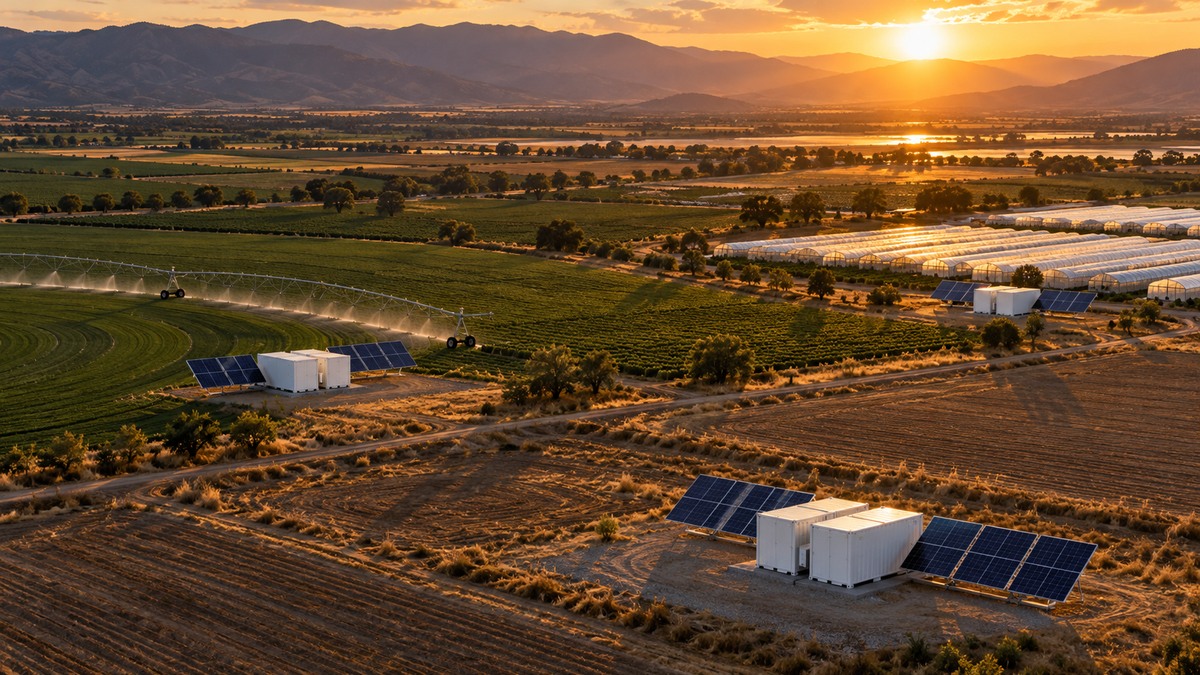
If you have or plan rooftop solar, storage converts midday surplus into evening supply instead of exporting it at unfavorable rates. Pairing the two — solar-plus-storage — is why hybrid systems have become the default configuration for new commercial projects.
Sizing basics: kW, kWh, and the equipment in between
Two numbers define a system: power (kW — how hard it can charge or discharge at once) and energy (kWh — how long it can sustain that). A facility that needs to shave a brief 200 kW peak wants high power and modest energy; one riding out long evening rate windows wants the reverse. Between the batteries and your switchgear sits the power conversion system (PCS), and above it an energy management system (EMS) that decides, second by second, when to charge and discharge against your rate schedule. The EMS is where the economics are actually earned — ask hard questions about it.
What to look for in a deployment
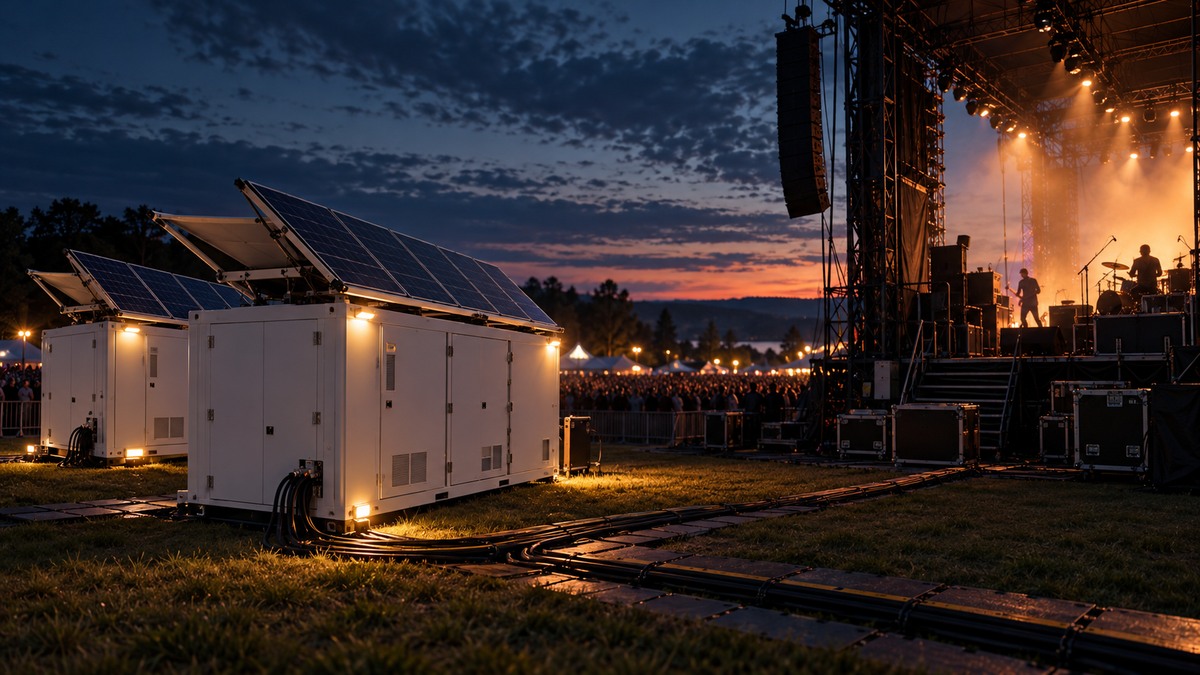
Containerized systems have largely won the commercial market, and for good reason: the batteries, PCS, fire suppression, and climate control arrive as a single factory-integrated, certified unit rather than a field-assembled project. Mystic’s Energy In A Box™ takes this approach — configurable from 100 kWh to 2 MWh per unit, stackable for larger sites, deployable in under 24 hours without waiting on foundations, and monitored remotely. Whatever vendor you evaluate, look for third-party certification, a warranty aligned with the system’s design life, and remote monitoring you can actually see.
The 2026 incentive picture
Standalone storage qualifies for the federal Investment Tax Credit, and current law allows near-full first-year expensing of qualifying equipment — but several provisions carry deadlines in 2026 and 2027, and safe-harbor rules govern what counts as having started in time. The details move quickly and interact with your tax position, so treat any incentive math — including anything in this post — as a starting point to verify with qualified tax counsel, not a promise.
Frequently asked questions
How much space does a commercial battery need?
A containerized unit has roughly the footprint of a shipping container plus clearance. Parking-lot corners, loading areas, and side yards are typical placements.
How long do the batteries last?
Modern lithium iron phosphate (LFP) systems are typically designed and warrantied for 10–15 years of daily cycling, with capacity degrading gradually rather than failing outright.
Do I need solar to justify storage?
No — peak shaving and arbitrage work on grid power alone. But pairing storage with solar improves the return on both sides, which is why solar-plus-storage is the most common configuration.
What does the process look like?
A serious proposal starts from your interval meter data — a year of 15-minute readings — and models the battery against your actual peaks and rate schedule before anyone talks price.
Next step
Start with our Commercial BESS overview to see configurations and specifications, brush up on terminology in the glossary, or contact us to have your interval data modeled against a system sized for your facility.