Rural America is being squeezed from three directions at once. Electricity rates in many rural service territories have climbed roughly 47% in five years, and utilities are increasingly prioritizing the concentrated, high-value load of data centers over dispersed agricultural customers. Diesel — the traditional backstop for wells, pumps, and remote equipment — is expensive, logistics-heavy, and fragile in exactly the moments you need it most. And across the West, drought keeps raising the energy cost of moving water during the hours the grid is weakest.
For farms and ranches, energy has quietly become one of the least controllable input costs in the operation. This post looks at a different approach: generating and storing power on-site with deployable solar-plus-storage, and what the economics of that shift look like in 2026.
What a deployable solar-plus-storage node is
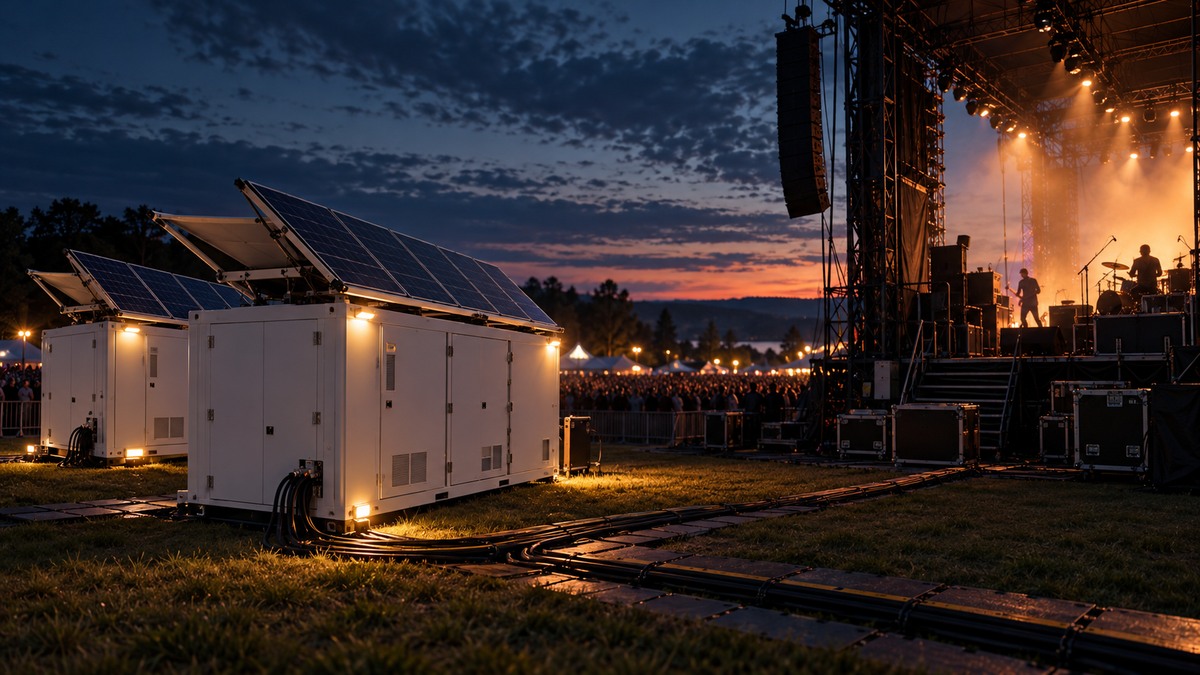
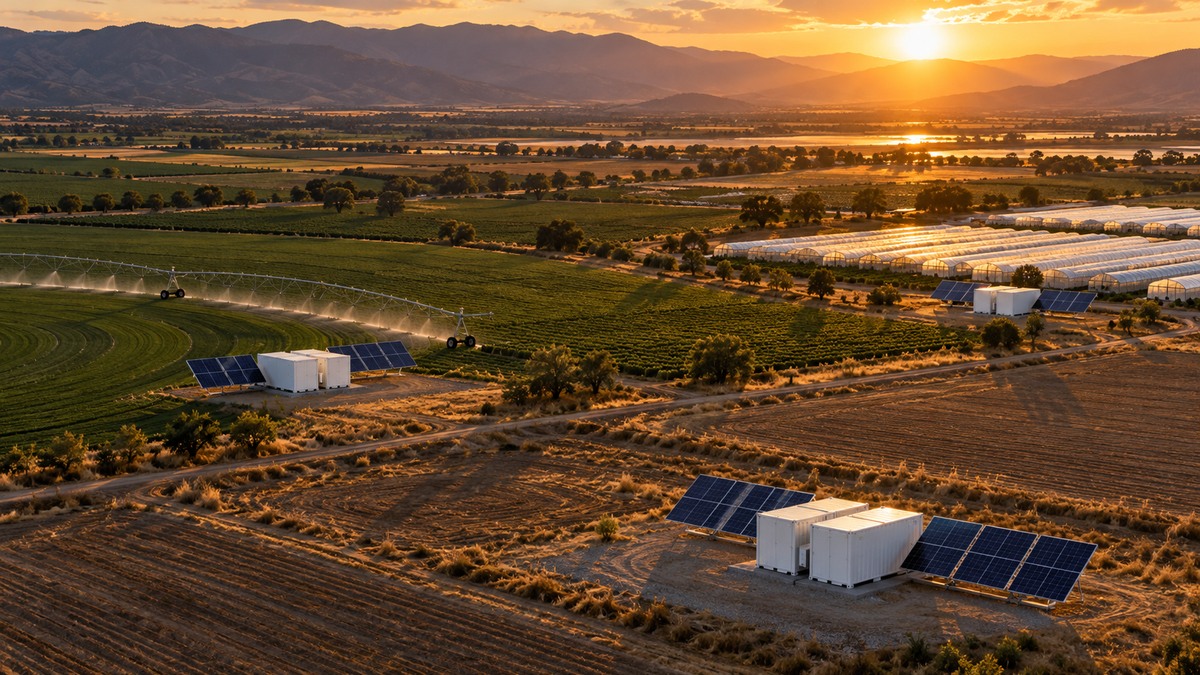
Traditional on-farm solar means permits, foundations, interconnection queues, and months of construction. A deployable node compresses all of that into a containerized package: a transportable unit that combines a fold-out solar array (up to roughly 140 kW) with modular battery storage configurable from 100 kWh to 2 MWh — and stackable beyond that as the operation grows.
Because nothing is permanently constructed, a node can be sited and producing power in under 24 hours, without waiting on foundations or an interconnection approval. Remote monitoring handles dispatch, state of charge, and maintenance alerts, and systems are SGS-certified. One node can power a single operation; several can be linked into a mini-grid serving barns, houses, and processing facilities across a property.
What it actually powers
The load profile of a working farm or ranch maps well to solar-plus-storage: water wells and stock pumps, center-pivot irrigation, electric fencing, ventilation and climate control in barns and stables, cold storage, greenhouses, workshop equipment, and increasingly, electric vehicles and machinery. Storage is what makes the system dependable — the batteries carry nighttime loads, cloudy stretches, and the pre-dawn irrigation window, then recharge when the sun returns.
The economics, modeled honestly
Modeled over a 20-year useful life, delivered energy from a solar-plus-storage node works out to roughly 1.8¢ per kWh — against a rural grid average of about 16.7¢ and a fully loaded diesel cost that can exceed 45¢ per kWh once fuel, hauling, maintenance, and downtime are counted. With current incentives applied, modeled payback lands in the 3–6 year range, followed by well over a decade of near-zero-marginal-cost power. Operations with net metering can also sell midday surplus back to the grid.
An important caveat: these figures are modeled illustrations built from published cost benchmarks and engineering assumptions — not price quotes or guarantees. Actual results depend on your loads, location, solar resource, rates, and the incentives available when you deploy. Any serious conversation should start with a site-specific engineering and economic assessment.
The 2026 incentive window
What makes the timing unusual is the stack of programs currently available: near-full first-year expensing of qualifying equipment under the One Big Beautiful Bill Act, retained energy-storage tax credits, USDA REAP grants, state and utility programs, and net metering — with possible drought-relief funding layered on top in parts of the West. Several of these windows have firm deadlines in 2026 and 2027. Stacked in favorable combinations, they can reduce the net cost of a deployment to a fraction of the gross system price. Confirm the current status of each program with qualified tax counsel before relying on it — the deadlines are the reason many operations are running the numbers now rather than next year.
Beyond the meter: energy as a rotation crop
Because the node is mobile, it never permanently converts farmland. Some operations treat it like a rotation crop: park it on the field lying fallow this season, power the operation from it, then move it when that field returns to production. Add agrivoltaics — grazing or shade-tolerant crops under elevated panels — and greywater reuse, and the node becomes the hub of a more closed-loop, self-sufficient operation.
Frequently asked questions
How fast can a system be deployed?
Because the node is containerized and requires no permanent foundation or interconnection approval to begin operating, deployment typically takes less than 24 hours from arrival on site.
What happens when the batteries run down?
Systems are sized against your actual load profile so the array recharges storage faster than typical daily consumption draws it down. Sizing against winter sun-hours and peak irrigation is part of the site assessment.
Does this replace my grid connection?
It can operate fully off-grid, alongside the grid, or as backup. Many operations keep their grid tie for surplus sales and redundancy while shifting the bulk of consumption on-site.
Is my operation too small — or too big?
Storage is configurable from 100 kWh (a single well-and-cold-storage operation) to 2 MWh per node, and nodes stack into mini-grids for larger operations.
Where to go from here
If you want to see how the same containerized storage platform serves commercial and industrial facilities, start with Mystic’s Energy In A Box™, or explore the full renewable energy portfolio. Unfamiliar terms — ITC, safe harbor, behind-the-meter — are all defined in plain language in our energy glossary. And if you want the numbers run against your own operation, get in touch for a site-specific assessment.