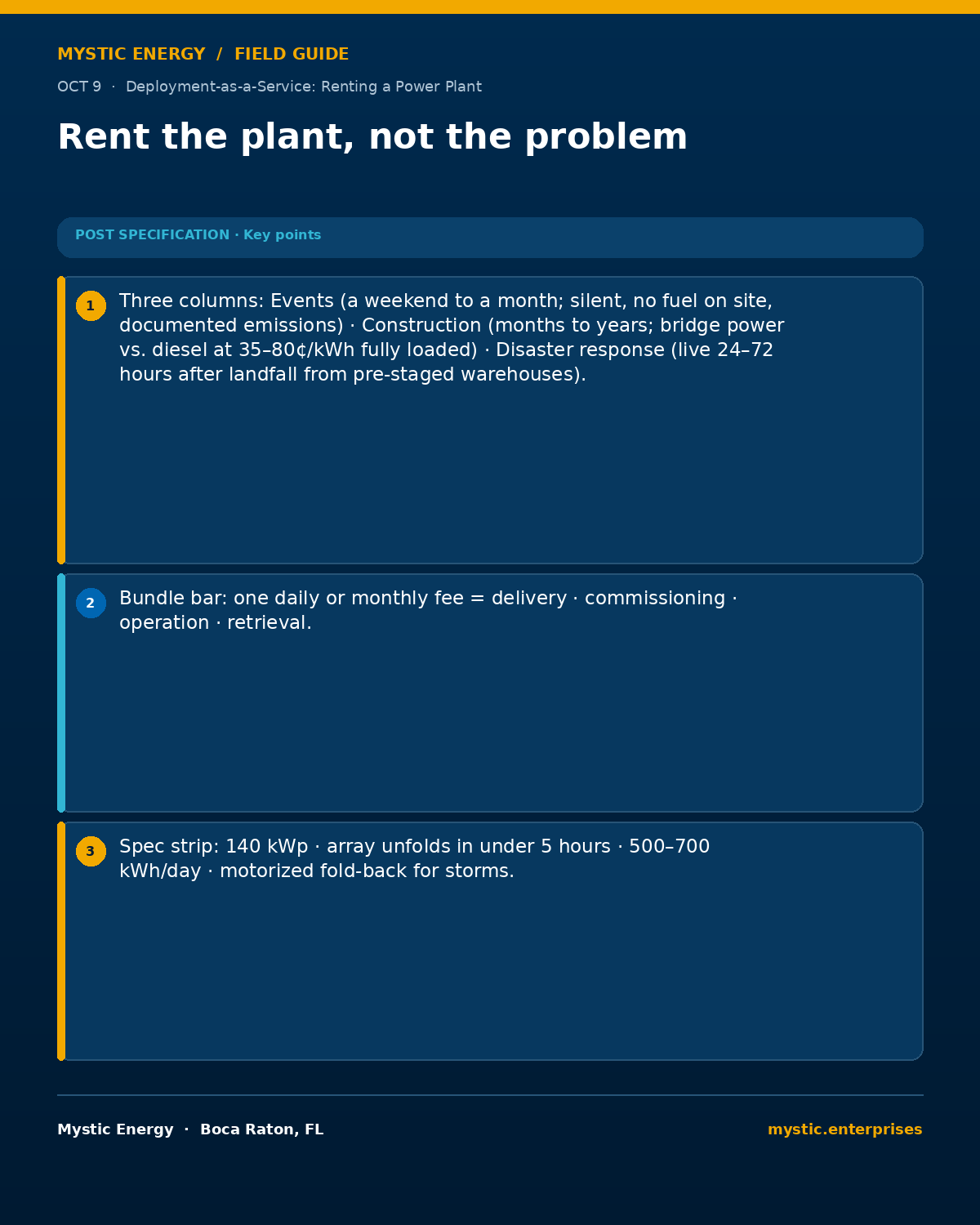
Not every power need is permanent. A festival needs serious electricity for a weekend; a construction project needs it for eighteen months; a county emergency operation needs it for the two weeks after landfall. For a century, the answer to all three has been the same: a fleet of diesel generators and the fuel-truck logistics behind them. Mystic Energy offers a different answer — deployment-as-a-service, a commercial structure in which you rent the power plant itself: a daily or monthly fee that bundles the node, delivery, commissioning, operation, and retrieval into one engagement.
What you are actually renting
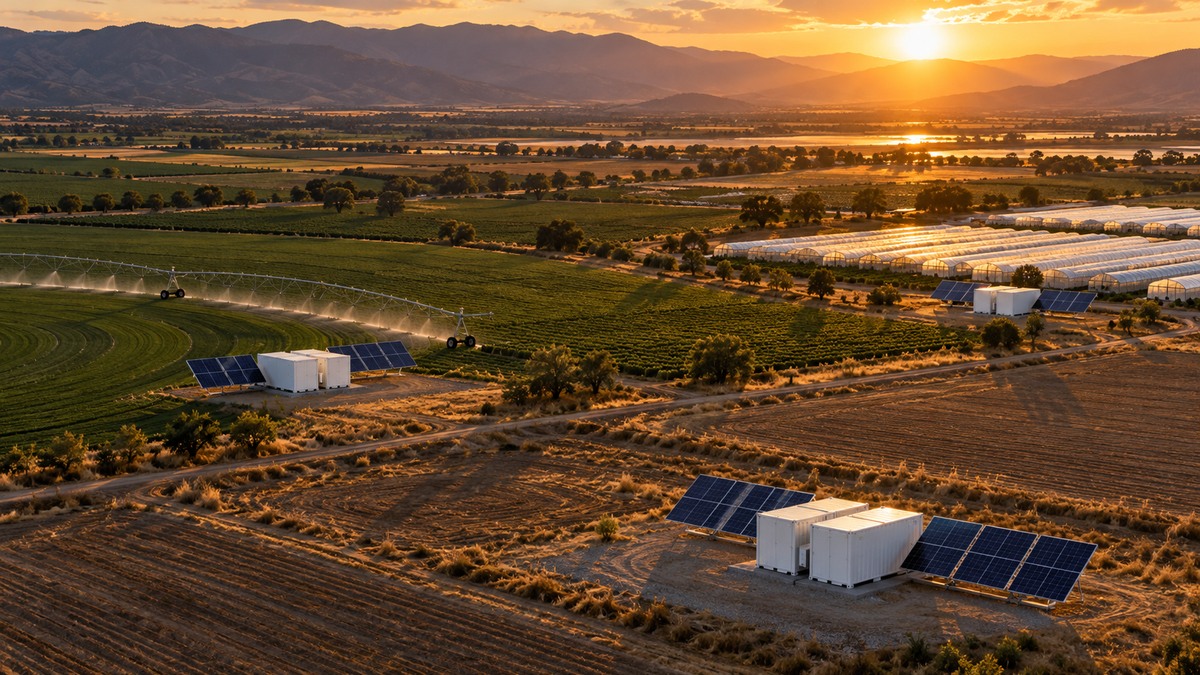
The asset behind the service is Mystic Energy’s Deployable Hybrid Power Node: a two-container, crane-transportable solar-plus-storage plant. The solar container unfolds in under five hours into a roughly 720-square-meter ground array producing up to 140 kW peak; the second container holds an integrated lithium iron phosphate battery system, typically configured from 250 kWh upward, with the power conversion, thermal management, and fire suppression built in. On a good sun day a node delivers roughly 500–700 kWh — the daily demand of thirty to fifty homes, or a stage rig, a field camp, or a site office cluster — silently, with no fuel deliveries. When weather threatens, the array retracts by motor for storm conditions; when the engagement ends, the same crane that delivered it takes it away.
Deployment-as-a-service is one of four commercial structures we offer alongside outright purchase, capital lease, and power purchase agreements. It exists specifically for short-duration and seasonal needs, where owning the asset makes no sense but the power requirement is serious. Engagements are priced per project — scope, duration, and site drive the fee — so we model each one rather than publishing a rate card.
Events: clean power as a visible commitment
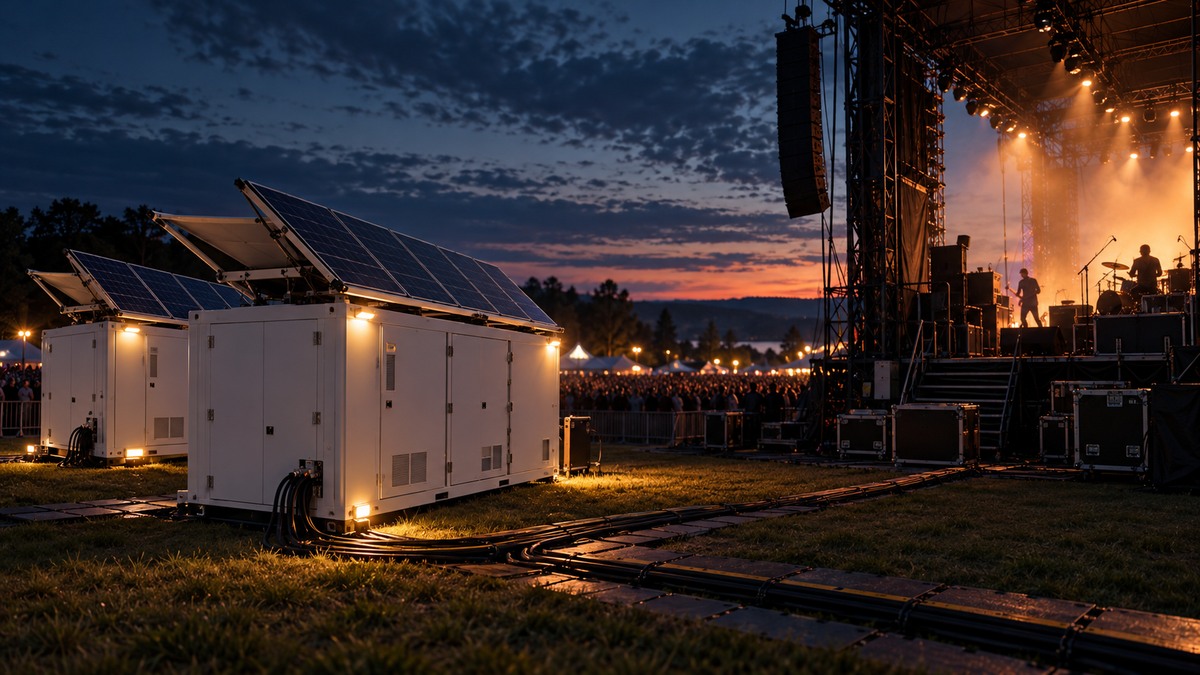
Music festivals, sports events, film productions, and trade shows have historically run on generator fleets, and that default is under pressure from two directions at once: corporate ESG commitments, and — in many markets — direct regulatory restrictions on event-related emissions. A node or small cluster replaces the generator row for a weekend or a month, silently and with no fuel logistics, then leaves when the load-out does.
Our hybrid-platform white paper is candid about the commercial shape of this segment: event producers who brand on sustainability use the nodes as a visible proof point, and typically pay a modest premium over diesel for the clean-power service. What they get for it is quiet (no generator drone behind the acoustic stage), no on-site fuel storage, and an emissions story they can document rather than assert — every deployment measures the carbon displaced and fuel avoided.
Construction: bridge power without the diesel premium
Construction sites often operate for years before permanent utility service is energized — and remote projects may never get it. Diesel at such sites carries a fully loaded cost our analysis puts at 35 to 80 cents per kilowatt-hour once fuel, trucking, generator maintenance, and downtime are counted. A rented node powers the site office, tools, and equipment charging from day one; a multi-node cluster runs a large project as a hybrid microgrid with the retained generators cycled far less often. When the permanent interconnection goes live, the nodes leave — no stranded asset, no resale problem.
Disaster response: power that arrives with the convoy
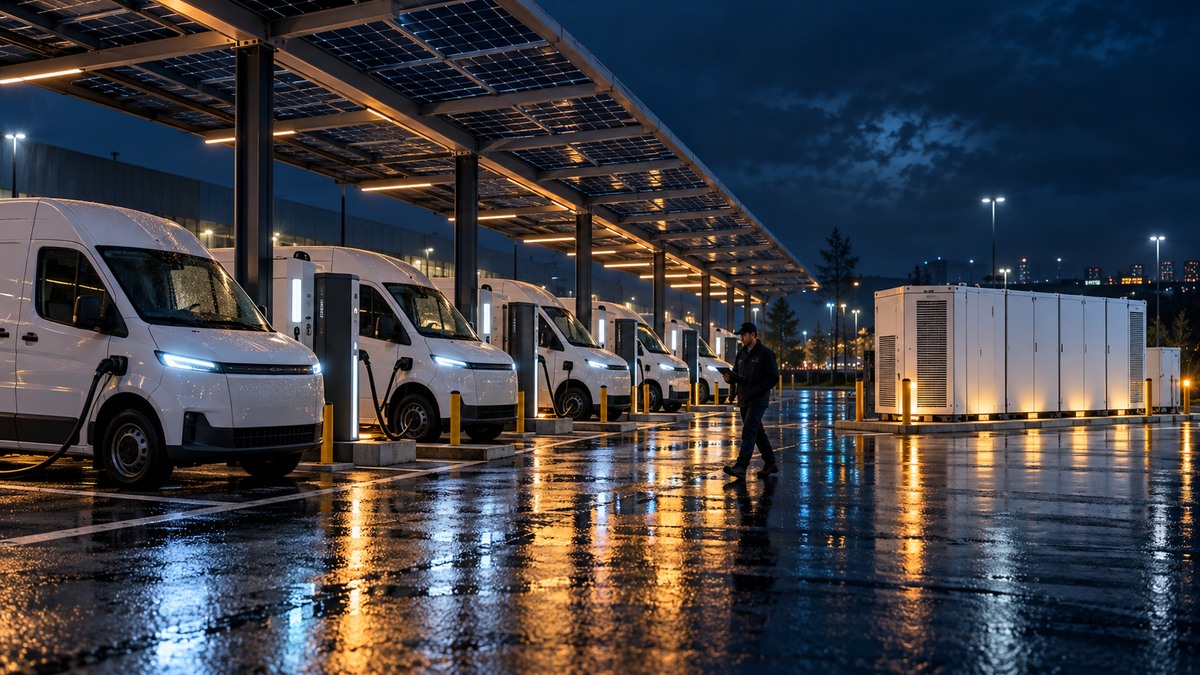
The deepest fit is emergency management. After a hurricane, critical facilities — shelters, water treatment, communications, command posts — lose power exactly when generator fuel becomes a bottleneck. A fleet of pre-staged nodes, held in regional warehouses under standby contracts, can be trucked into an affected area and producing fuel-free power within 24 to 72 hours, then return to the warehouse between events. The engineering template is proven at utility scale: Florida Power & Light’s Manatee Energy Storage Center pairs containerized storage with solar as a grid resilience asset, and Tyndall Air Force Base’s post-hurricane rebuild made solar-paired battery microgrids a deliberate design choice — utility and Department of Defense precedents, respectively, for the same containerized-LFP-plus-solar approach delivered here at deployable scale.
Why rent instead of buy?
Three reasons recur. Speed: a conventional power project takes years; a node is operating within weeks of an order and hours of arrival. Balance sheet: a temporary need gets an operating expense, not a capital asset to depreciate, insure, and eventually dispose of. Risk transfer: commissioning, operation, and retrieval are the provider’s job — your team runs its event, project, or response, not a power plant. Organizations whose temporary need becomes permanent can graduate to lease, PPA, or purchase without changing platforms.
Frequently asked questions
What does deployment-as-a-service cost?
Engagements are priced per project as a daily or monthly fee covering delivery, commissioning, operation, and retrieval. Scope, duration, location, and load determine the figure, so we scope each engagement rather than publish generic pricing.
How fast can a node be on site?
Commissioning takes under 24 hours from arrival, and the solar array unfolds in under five hours. Overall lead time depends on fleet position and logistics — for disaster response, pre-staged standby arrangements are what compress the response to the 24–72 hour window.
Can a node fully replace generators on my site?
For many event and office-scale loads, yes. Larger construction and industrial sites typically run a hybrid: nodes carry the base load while retained generators cover deep backup and peaks, cutting fuel burn substantially. The site assessment sizes the right mix.
What happens in severe weather during a deployment?
The array retracts by motor within hours for storm conditions, the storage container is a sealed marine-rated enclosure, and deployments are ballasted or anchored to the site’s wind regime. Fold-back and redeploy is a designed-in operating mode, not an improvisation.
Power for exactly as long as you need it
If your organization has a serious but temporary power need — a season, a build, a response plan — you can rent the plant instead of buying the problem. Explore the Mystic Energy platform, see the energy glossary for the vocabulary, or contact our team to scope an engagement. Mystic Energy — Boca Raton, FL · +1 (762) 316-5592.