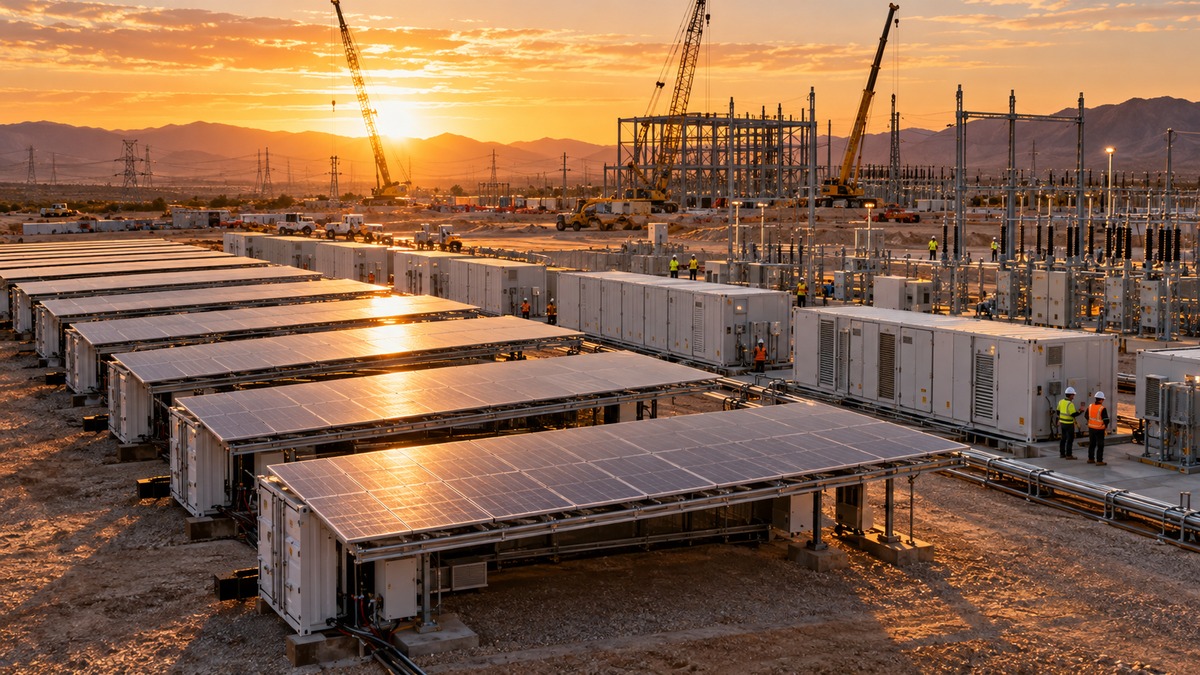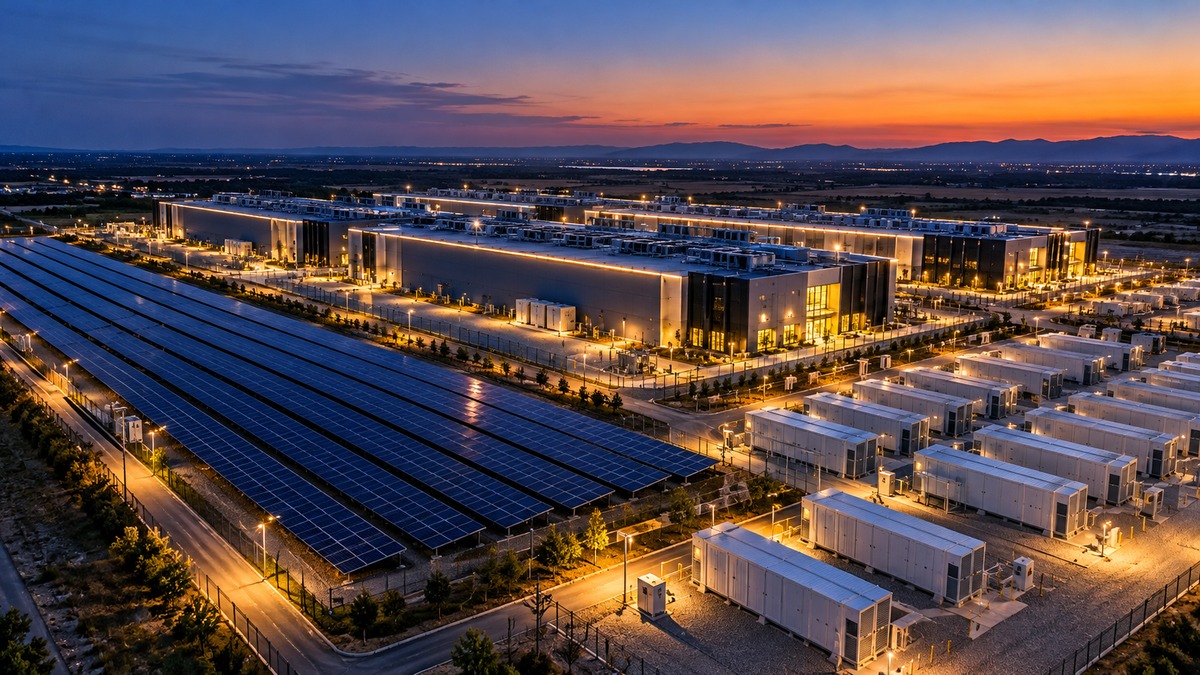
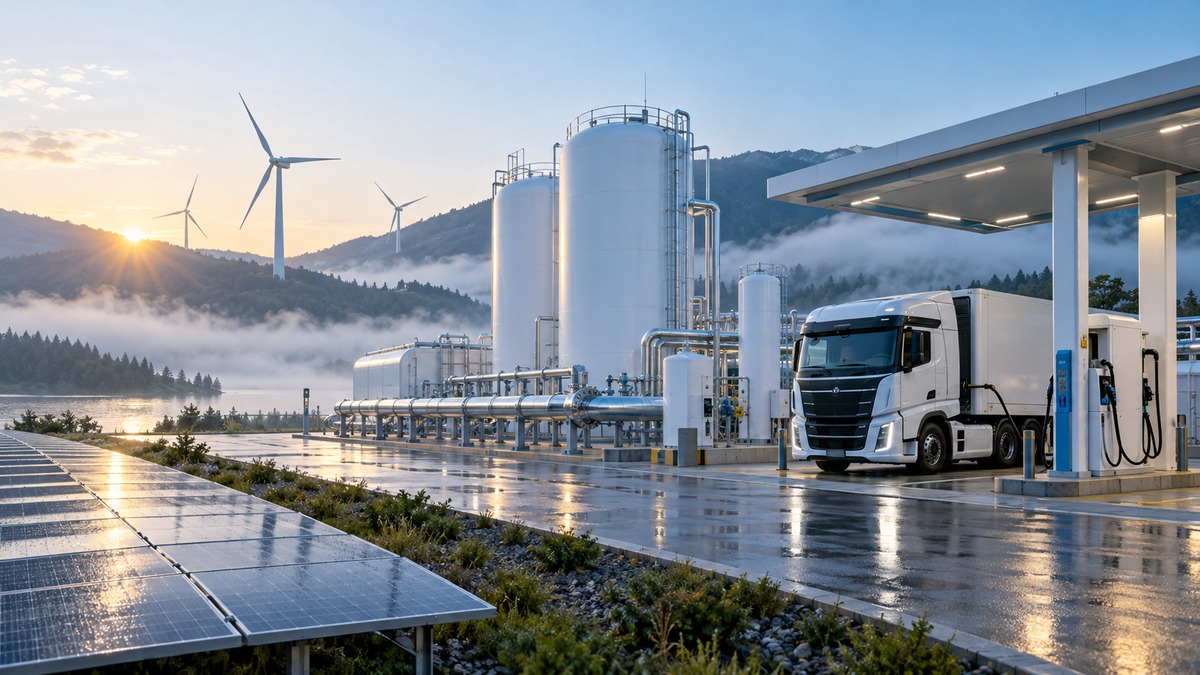
Most of what we write about on this blog stores electrons or generates them. This post is about the asset class that does neither, exactly — the one that converts clean electricity into a fuel you can hold, move, and burn without emissions. Hydrogen is the most argued-about line item in modern energy planning: indispensable in some roles, uneconomic in others, and frequently proposed for jobs that batteries or wires do better. Mystic Energy’s hydrogen infrastructure practice is a full value-chain advisory — and the honest place to start is with what hydrogen actually is.
A carrier, not a source
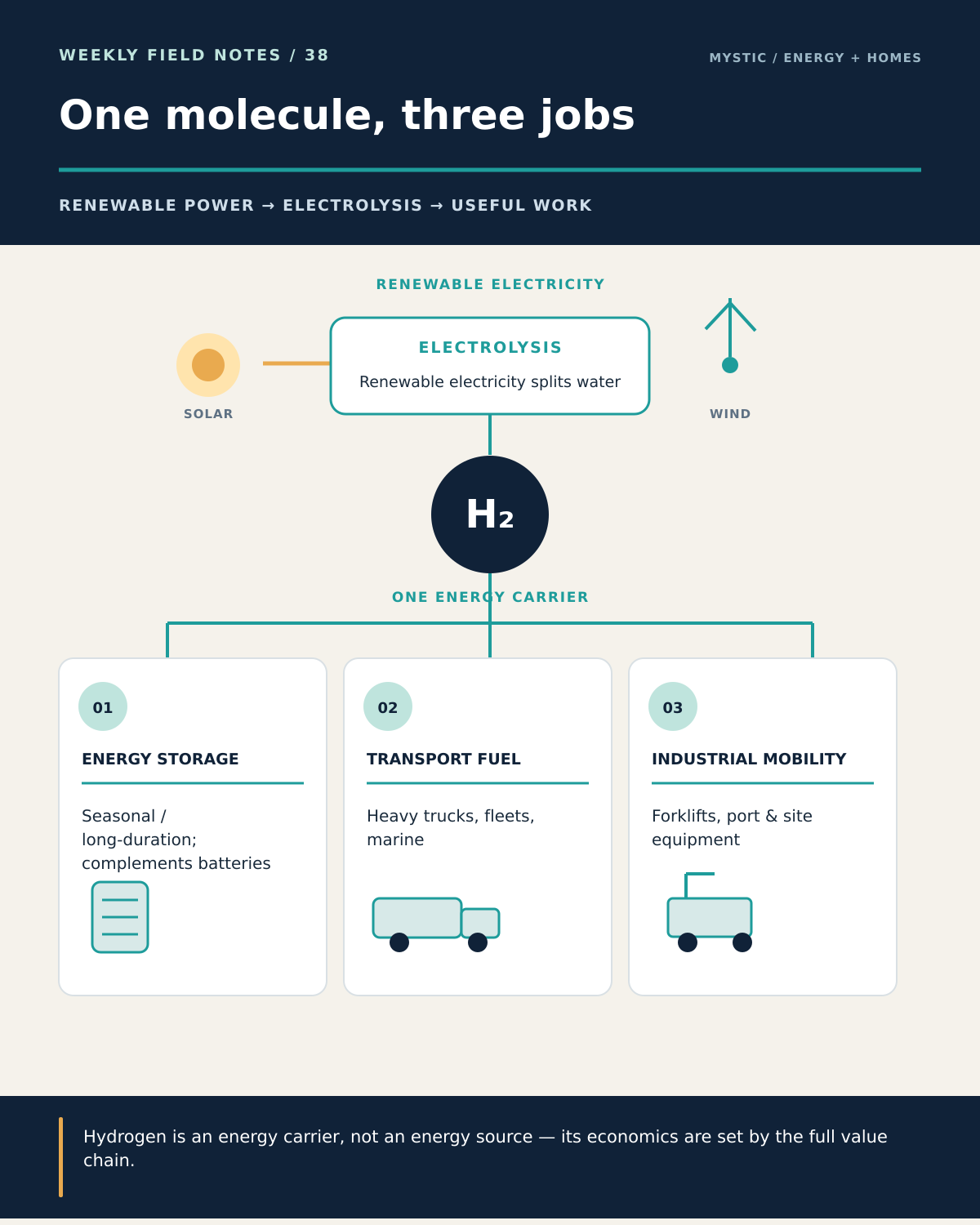
Hydrogen is not an energy source; it is an energy carrier. Zero-emission hydrogen is made by using renewable electricity to split water, which means every kilogram embodies electricity that was generated somewhere first. That single fact drives all of the planning discipline around it: hydrogen competes not with solar or wind, but with the other things you could do with the same clean electricity — use it directly, store it in batteries, or move it down a wire. Where those options run out is where hydrogen’s case begins.
Job one: storage beyond the battery window
Battery storage is the workhorse of daily energy shifting — the midday-surplus-to-evening-peak cycle we covered in our post on energy arbitrage with commercial batteries. Batteries excel across hours; their economics thin as the storage duration stretches to weeks and seasons, because you pay for capacity you cycle rarely. That long-duration gap is the storage role the industry assigns to hydrogen: converting surplus renewable generation into a fuel that can sit in tanks or caverns indefinitely and come back as power, heat, or feedstock when it is needed. In a portfolio, the two are complements, not rivals — batteries for the daily cycle, hydrogen as one of the candidate answers for the long tail. Within Mystic Energy’s advisory scope, hydrogen storage is evaluated alongside batteries, pumped hydro, and transmission rather than sold as the default.
Job two: transport fuel
Battery-electric drivetrains are winning the passenger-vehicle and depot-fleet race — our post on commercial EV charging for fleet depots covers that buildout. Hydrogen’s transport case concentrates where batteries strain: very heavy loads, very long ranges, and duty cycles that cannot afford charging dwell time. Fuel-cell heavy trucks, marine vessels, and return-to-base fleets with on-site fueling are the classic candidates. The determining factor is rarely the vehicle — it is the fueling infrastructure, which is why Mystic treats hydrogen transport as an infrastructure advisory question: where fuel is produced, how it reaches the fleet, and what utilization the station needs to make sense.
Job three: industrial mobility
The quietest hydrogen market is also the most proven one: industrial mobility — forklifts, yard tractors, port and warehouse equipment running fuel cells instead of batteries or diesel. High-utilization industrial fleets refuel in minutes, run multiple shifts without battery-swap logistics, and concentrate their fueling demand at a single site, which is precisely the shape of demand that makes on-site hydrogen production economical. For industrial operators, this is frequently the practical entry point into hydrogen: a contained site, a measurable duty cycle, and a business case that does not depend on public infrastructure arriving.
Why “full value chain” is the whole game
Hydrogen projects fail in the seams. A production facility without committed offtake, a fleet conversion without reliable fuel supply, a storage play without a clear repowering path — each is a sound component stranded by a missing neighbor. That is why Mystic Energy’s hydrogen practice is structured as full value-chain advisory across energy storage, transport fuel, and industrial mobility: production, storage, distribution, and end-use scoped together, so each link is sized against the others rather than against a brochure. Per our materials, Mystic’s advisory network spans 120-plus countries, and the same portfolio discipline we apply to solar, wind, geothermal, hydro, and wave development applies here: hydrogen earns its place in a plan by out-competing the alternatives for a specific job, not by being new.
What we deliberately will not do in a blog post is quote hydrogen production costs or project returns. The economics move quickly, vary enormously by site and electricity price, and deserve a scoped analysis rather than a headline number.
Frequently asked questions
Is hydrogen a replacement for battery storage?
No — they solve different durations. Batteries dominate the daily shifting that drives most storage value today; hydrogen is a candidate for long-duration and seasonal storage, and for uses batteries cannot serve at all, like zero-emission fuel and industrial feedstock. A sound portfolio scopes both against the actual load.
What makes hydrogen “zero-emission”?
The production path. Hydrogen made by splitting water with renewable electricity emits nothing in production, and a fuel cell emits only water in use. Hydrogen made from natural gas without abatement does not qualify — which is why the production method is the first question in any hydrogen plan.
Where should an industrial operator start?
Usually with industrial mobility: a defined fleet, a single fueling site, and a measurable duty cycle make the business case testable at contained scale. Transport fleets and long-duration storage build on the same production and storage foundations once they are proven on site.
Does Mystic build hydrogen projects or advise on them?
Mystic Energy’s role is advisory and project development across the full value chain — production, storage, distribution, and end-use — alongside the solar, wind, geothermal, hydro, and wave work the practice is built on. Scoping starts with your load, fleet, or grid position, not with a technology commitment.
Scope the molecule against the alternatives
The right question is never “should we do hydrogen?” — it is “what is the cheapest zero-emission way to do this job?” Explore commercial battery storage as the near-term comparison point, get the vocabulary straight in our energy glossary, or contact our team to scope storage, transport, and industrial hydrogen against every alternative. Mystic Energy — Boca Raton, FL · +1 (762) 316-5592.