Every utility and independent power producer knows the most expensive phase of a project: the years when the capital is committed and the land is controlled, but nothing is generating. Interconnection queues, permitting, environmental review, and construction stack into a two-to-five-year gap between decision and commercial operation — a gap the balance sheet carries in silence. Mystic Energy’s answer for this segment is the bridge asset: a fleet of deployable hybrid power nodes stationed at the project site, earning revenue and proving the interconnection while the permanent plant is built.
What a node fleet is
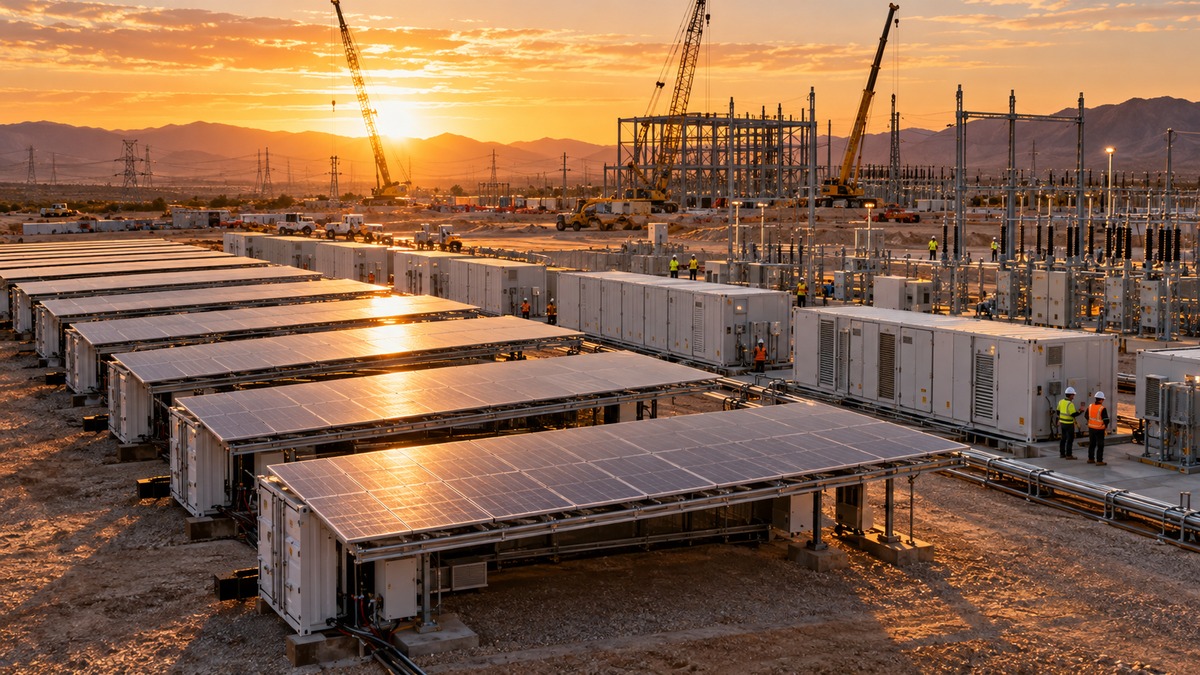
Each Deployable Hybrid Power Node pairs two containers: an unfolding solar array of up to 140 kilowatts peak that a crew commissions in hours, and an LFP battery system from 250 kilowatt-hours upward with its own power conversion, energy management, thermal control, and fire suppression. Nodes federate — five serve a large operation, fifty form a distributed microgrid, and hundreds, dispatched through a common energy-management layer, behave as a virtual utility. We traced that scaling path in our post on going from one node to a virtual power plant; for a utility, the relevant property is that capacity arrives by multiplication, within weeks of a purchase order, and leaves the same way.
Use one: revenue during the build-out
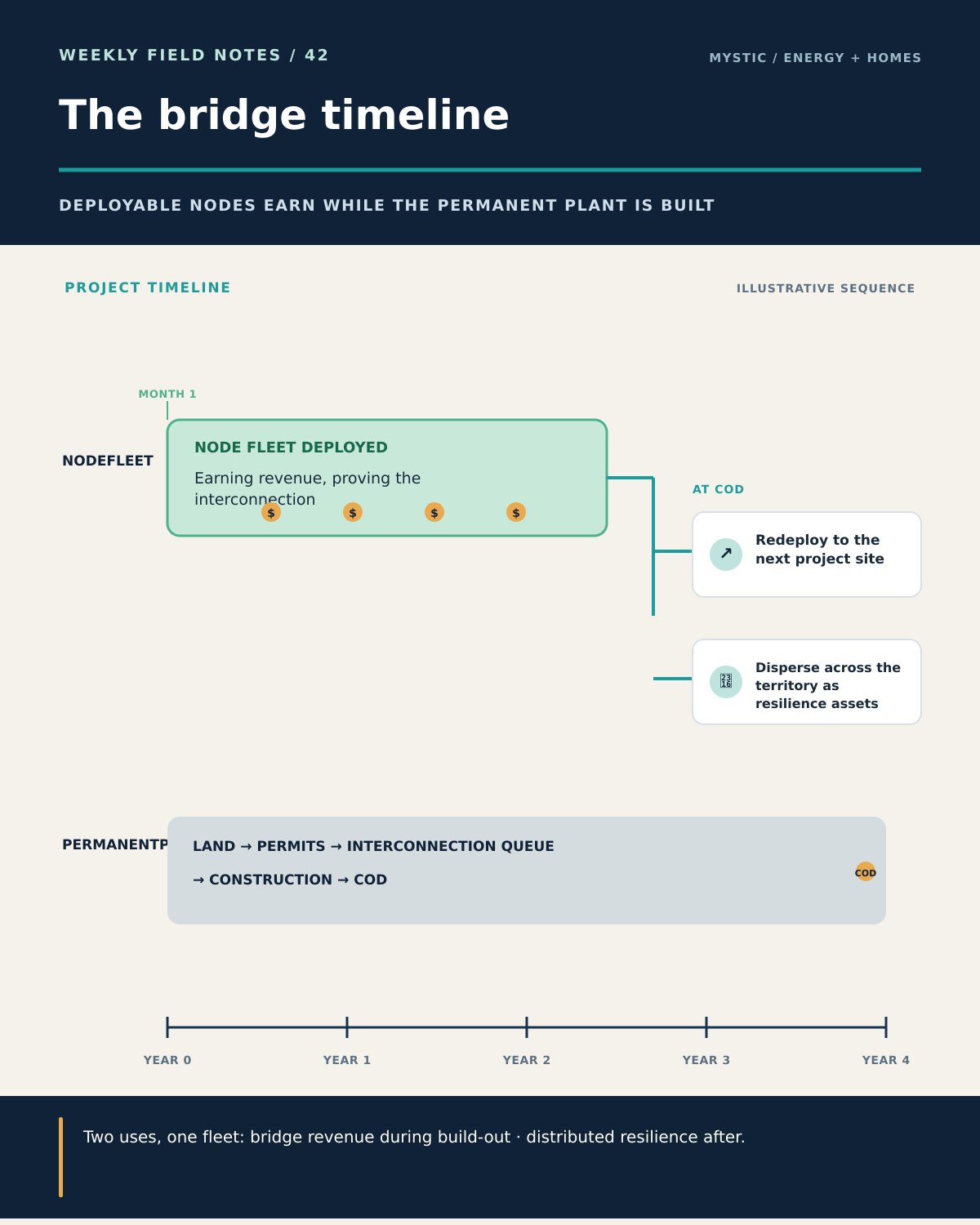
A utility or IPP that has committed to a large permanent solar-plus-storage project can deploy a node fleet at the same site while construction proceeds. The fleet does two jobs at once. It generates and stores energy that earns against the tariff or the market from the first month, softening the dead-capital years. And it proves the interconnection — energizing the connection, exercising the metering and dispatch arrangements, and surfacing the integration problems at a scale where they are cheap to fix. When the permanent plant reaches commercial operation, the nodes retract, load onto trucks, and redeploy to the next project — the same mobility we covered from the customer side in deployment-as-a-service.
Use two: the permanent distributed fleet
The second utility use case never demobilizes. A utility operating in hurricane, wildfire, or seismic territory can disperse nodes across its service area as distributed resilience assets — generation that has no single point of failure because it has no single point. A storm that takes down one feeder or one substation strands one node’s output, not a fleet’s. The solar arrays retract on a motorized fold-back ahead of severe weather and redeploy after it passes, which is a capability no fixed plant can offer a storm-exposed grid. For resilience planning, that converts generation risk from a concentrated exposure into a portfolio: maintenance windows, equipment faults, and storm damage are absorbed one node at a time while the rest of the fleet dispatches around them.
The precedent is already on the Florida grid
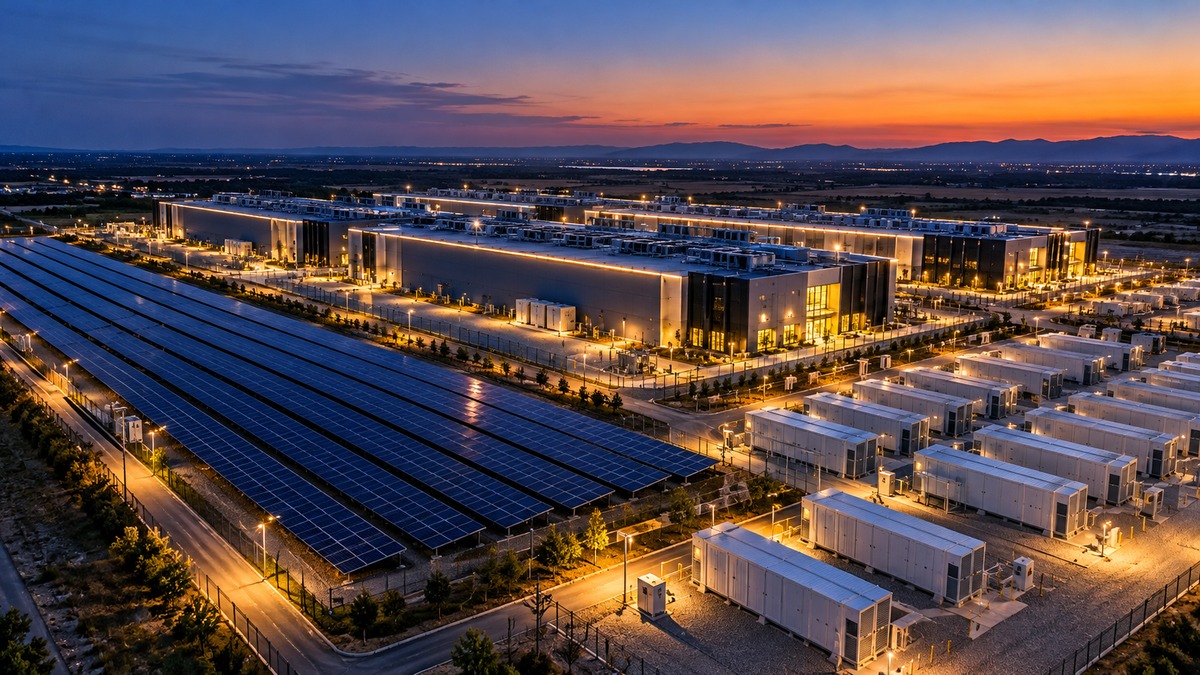
Utility-scale solar-paired storage is settled practice here. The Manatee Energy Storage Center in Parrish, Florida — Florida Power & Light’s facility, commissioned in 2021 — pairs 409 megawatts and 900 megawatt-hours of containerized batteries with an adjacent 74.5-megawatt solar center, built from 132 battery containers on a 40-acre site and able to serve the equivalent of roughly 329,000 homes for more than two hours at full discharge. The engineering template — containerized LFP storage co-located with solar — is the same one Mystic Energy delivers at distributed, mobile scale. The bridge-asset proposition simply moves that template upstream in the project timeline.
How the deals are framed
Commercial structures for this segment follow utility procurement practice: multi-year tolling agreements, where the off-taker controls dispatch and pays for availability; capacity contracts; or outright asset purchase with Mystic Energy retained as the operations and maintenance provider. We deliberately won’t attach prices here — fleet size, duration, market design, and redeployment rights move the numbers too much for a blog figure to be honest. The structural claim stands on its own: a committed project that earns during construction is a different financial object from one that doesn’t.
Frequently asked questions
What does a bridge deployment actually prove about the interconnection?
That it works — physically and commercially. The node fleet energizes the connection, runs real export through the metering, dispatch, and settlement arrangements, and surfaces protection or communication issues years before the permanent plant depends on them, at a scale where fixes are cheap.
What happens to the fleet when the permanent plant comes online?
It moves. Arrays retract into their containers in roughly the time they took to deploy, and the same cranes and trucks that delivered them take them to the next build-out — or the utility keeps them dispersed across its territory as distributed resilience assets.
How do nodes behave in hurricane conditions?
The solar arrays retract motorized within hours ahead of a storm, deployed arrays use ballast or anchors rated to the site’s design wind speed, and the battery containers are sealed marine-rated enclosures engineered for tropical environments. After the event, the fleet redeploys — frequently as the restoration asset.
Does Mystic operate the fleet or sell it?
Either. Tolling and capacity structures keep Mystic as owner-operator; outright purchase transfers the assets with Mystic retained for operations and maintenance. The choice usually follows the utility’s accounting and regulatory preferences rather than the technology.
Make the build-out years earn
If a multi-year construction schedule is sitting between your capital and your revenue, a bridge fleet changes the math. Explore our renewable energy practice, brush up on terms in the energy glossary, or contact our team to scope a bridge deployment against your project timeline. Mystic Energy — Boca Raton, FL · +1 (762) 316-5592.