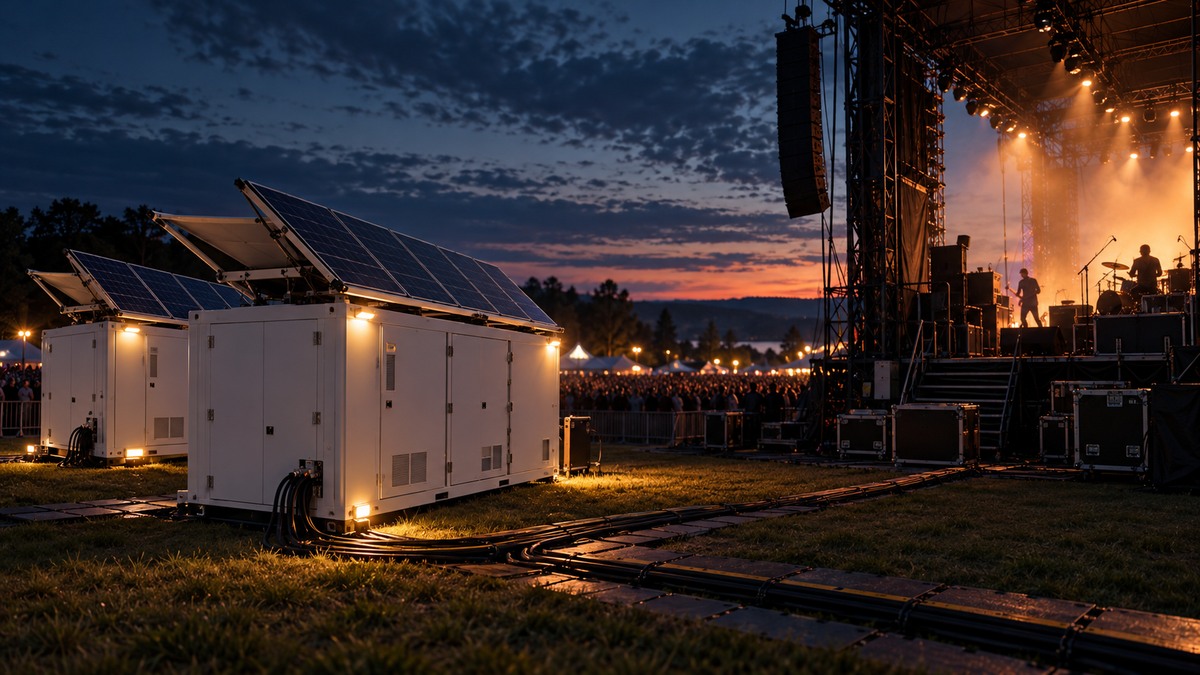
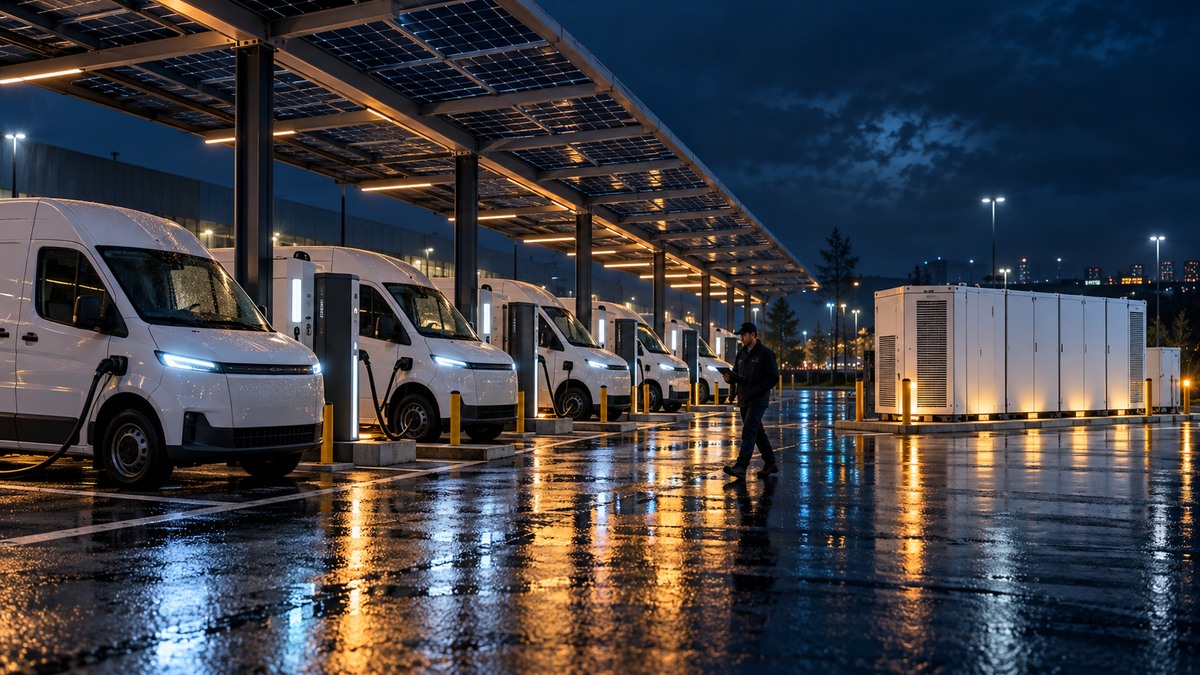
The first commercial EV chargers were installed like vending machines: pick a corner of the parking lot, pull a circuit, done. That era is over. A modern fleet depot or corridor charging site can draw as much power as a small industrial facility, and the decisions that make or break the project — utility capacity, load management, on-site generation and storage — are energy infrastructure decisions, not parking-lot amenities. Mystic Energy approaches commercial charging that way, through its EV and smart-grid infrastructure practice with partner Ark Smart Energy. Here is how the landscape breaks down.
Three tiers of commercial charging — and why they are different projects
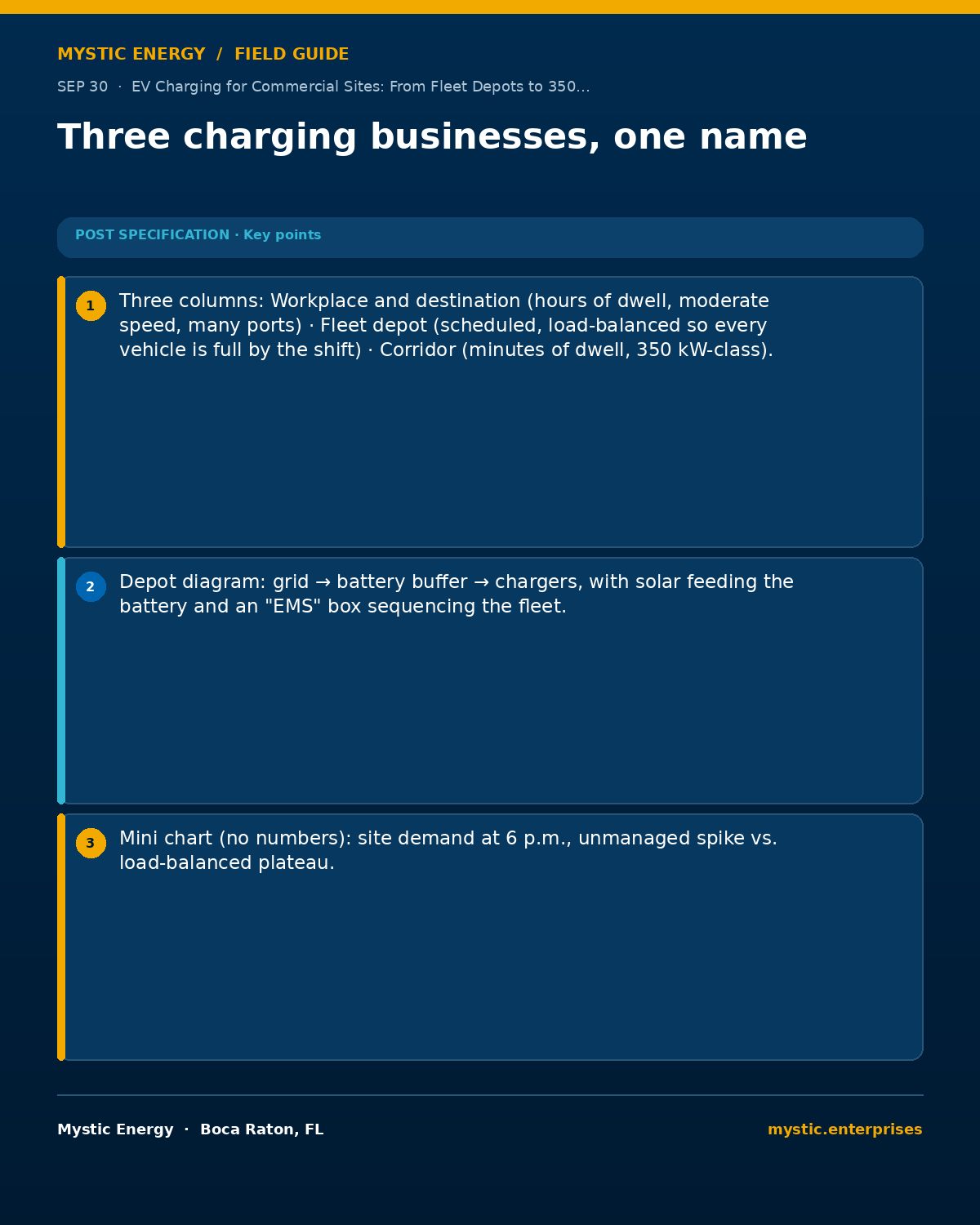
Commercial charging is really three businesses wearing one name. Workplace and destination charging — offices, retail, hospitality — serves vehicles that dwell for hours, so moderate charging speeds and many ports beat raw power. Fleet and depot charging serves vehicles on a schedule: delivery vans, service trucks, and buses that must all be full by the start of the shift. Corridor charging serves vehicles in a hurry, with ultra-fast equipment in the 350kW-and-up class that adds meaningful range in minutes rather than hours. Each tier implies a different utility conversation, a different equipment bill, and a different revenue logic — which is why the site assessment comes before the hardware order.
The fleet depot problem: everyone charges at once
Depots are where the naive approach fails fastest. Twenty vehicles returning at 6 p.m. and plugging in simultaneously create a demand spike the site’s utility service may never have been sized for — and commercial electricity billing punishes peaks. The answer is a load-balanced charging array: chargers managed as one system that sequences and modulates charging across the fleet so every vehicle is ready when dispatch needs it, without the whole depot drawing maximum power at once.
This is where the Ark Smart Energy EMS (energy management system) earns its place in our stack: peak-load shifting, demand response participation, predictive maintenance on charging assets, and integration of rooftop solar and battery storage into the same control plane. The EMS treats the depot as a single energy system — chargers, panels, batteries, and the utility connection — rather than a collection of appliances.
Why chargers and batteries belong together
The most consequential pairing in commercial charging is the charger plus on-site battery energy storage. A battery buffers the site’s draw from the grid: it charges when power is cheap or when the site’s own solar is producing, then discharges into vehicles during the peak. That can allow ultra-fast charging on a utility service that could not otherwise support it, soften demand peaks, and keep the depot operating through outages. For corridor sites in particular — where the grid connection is often the longest lead-time item in the project — storage can be the difference between opening this year and waiting for a utility upgrade. The economics are site-specific, which is why we model them per project rather than quoting generic figures.
The forward edge: vertiports, ports, and airports
Commercial charging does not stop at cars and trucks. Mystic Energy’s infrastructure practice extends to airport and seaport electrification and — through eVTOL partner EHang — to vertiport and drone-logistics infrastructure for air taxis and cargo drones. These are forward-looking programs: advisory goals and partnership targets rather than product catalogs. But the underlying engineering is the same discipline as a 350kW corridor site — high-power delivery, load management, and storage — which is why operators planning today’s depot are wise to size conduit and service capacity for tomorrow’s loads.
Where to start
Every successful charging project we see starts the same way: a load study before a hardware order. What does the utility service support today? What do the vehicles actually need, and when? What do on-site solar and storage change about both answers? Those questions determine whether a site needs a service upgrade measured in months or a battery measured in weeks — and they are answerable before any capital is committed. Our energy glossary covers demand charges, load balancing, and the rest of the vocabulary.
Frequently asked questions
What charging speed does a commercial site actually need?
It depends on dwell time. Vehicles that park for hours are well served by moderate-speed ports; scheduled fleets need managed overnight or shift-gap charging; only corridor and quick-turnaround sites justify 350kW-class equipment and its utility requirements.
Can a site add ultra-fast charging without a utility upgrade?
Sometimes — on-site battery storage can buffer the grid draw so short bursts of high-power charging ride on a smaller service. Whether that works for your site depends on utilization patterns and the existing service, which is what the load study establishes.
What does an energy management system add over smart chargers?
Smart chargers manage themselves; an EMS manages the site — sequencing the fleet, shifting peaks, participating in demand response, integrating solar and storage, and flagging maintenance before failures. At depot scale, the difference shows up directly on the utility bill.
Do you handle residential charging too?
Yes — every Eco-Haven home ships EV-charging ready, and the same practice covers residential equipment for all EV brands. This article focuses on commercial scale, where the infrastructure questions are harder.
Plan the depot as an energy asset
If your fleet, property, or municipality is planning charging infrastructure, start with the energy conversation. Explore the Mystic Energy platform or contact our team for a site and load assessment. Mystic Energy — Boca Raton, FL · +1 (762) 316-5592.