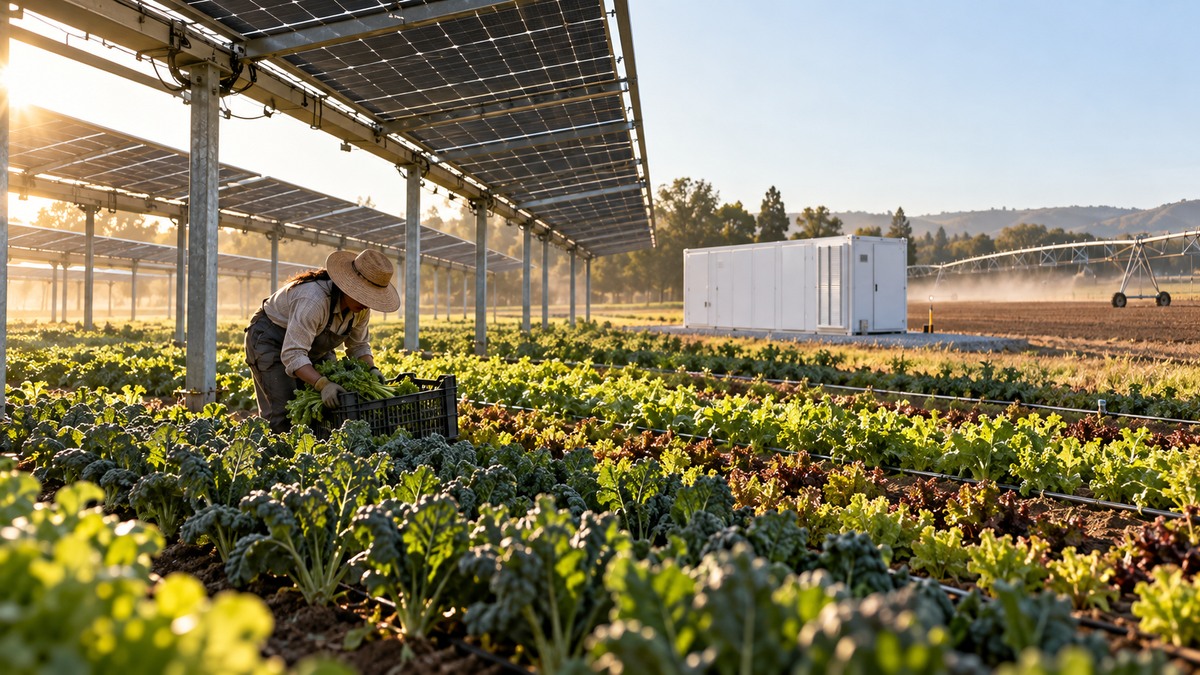
The standard objection to on-farm solar is land. Every acre under panels, the argument goes, is an acre out of production — so solar is something a farm does with its worst ground, reluctantly, or not at all. Agrivoltaics is the discipline that dissolves the objection: growing crops in the partial shade beneath and between solar panels, so a single acre produces energy and food at the same time. Done right, the panels are not competing with the crop. They are helping it.
This post covers what the research actually shows, which crops the model fits — and which it does not — and how a mobile, containerized solar-plus-storage platform changes the way a working farm can put agrivoltaics into rotation.
What the shade actually does
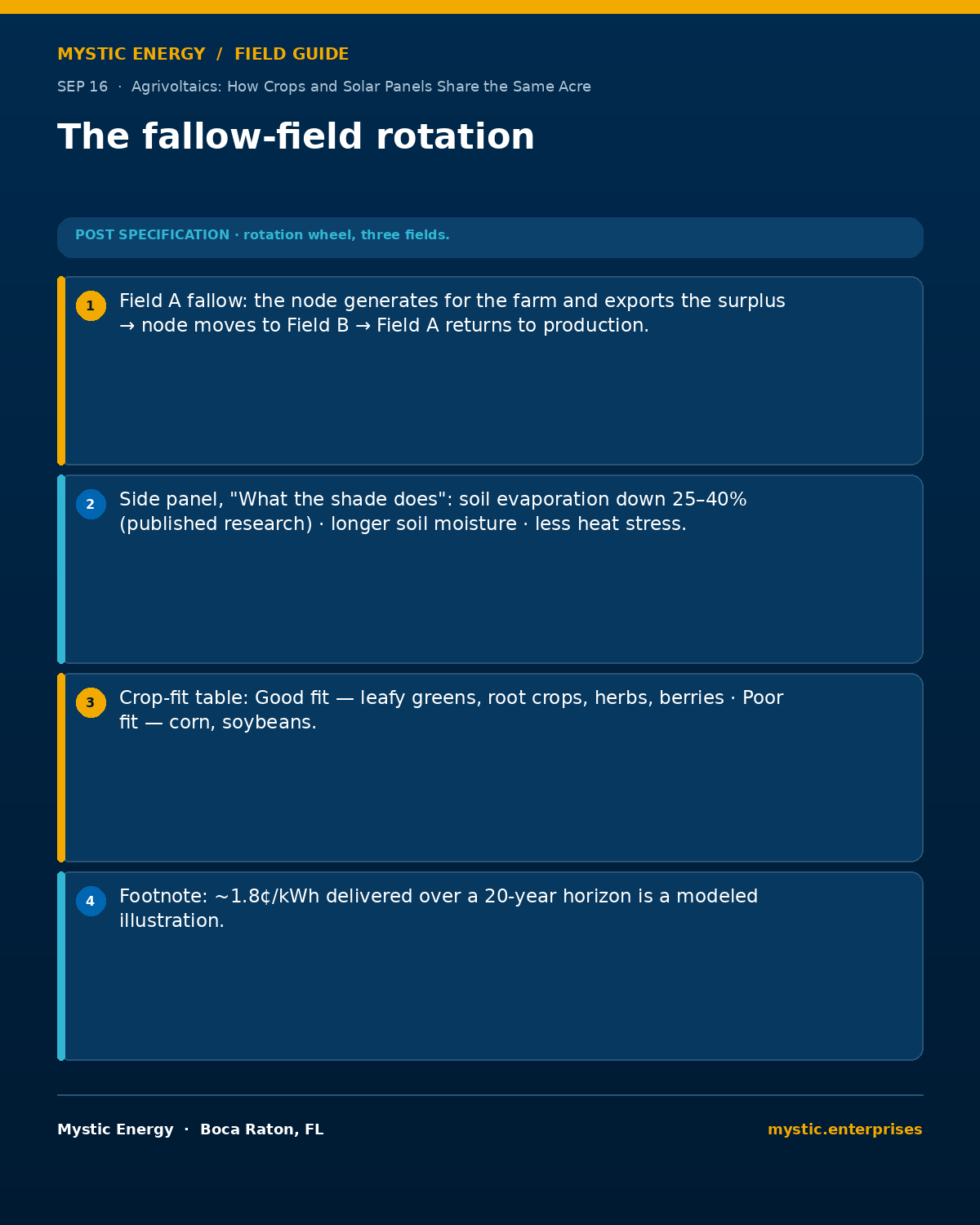
In arid and drought-stressed regions, the agronomy is the headline. The peer-reviewed agrivoltaics literature finds that panel shade cuts soil evaporation by roughly 25 to 40 percent, holds soil moisture longer between irrigations, and reduces heat stress on the plants growing beneath — and on the people working among them. In a drought year, those numbers are not a curiosity. They translate directly into less water pumped, which means less energy spent pumping it, on the hottest afternoons when both water and power are most expensive.
That is the same water–energy trap our farm storage work is built around: drought raises the energy cost of water exactly when the grid is most strained. Shade that lowers irrigation demand attacks the trap from the demand side while the panels above it attack the supply side.
The crops that fit — and the ones that don’t
Agrivoltaics has an honest limitation, and it is worth stating plainly: commodity corn and soybeans are poor candidates. They need full sun, and shading a main row crop to make room for panels is bad agronomy and worse economics. The strategy is not to shade the crop that pays the bills.
The strategy is to convert fallow, rotation, or marginal acres to high-value, shade-tolerant crops the panels actively help. The literature and USDA price data point to a consistent roster: leafy greens — lettuce, spinach, kale, chard — some of which yield better in partial shade because they resist bolting in heat; root crops and potatoes; herbs; and berries. Per acre, these specialty crops gross multiples of commodity grain. Treat any revenue-per-acre comparison as an illustrative gross figure drawn from the agrivoltaics literature and USDA price data — not net profit, and not a projection for a specific operation, because labor, markets, and water rights vary enormously. But the direction is consistent: the acres best suited to agrivoltaics are the ones currently earning the least.
The fallow-field play
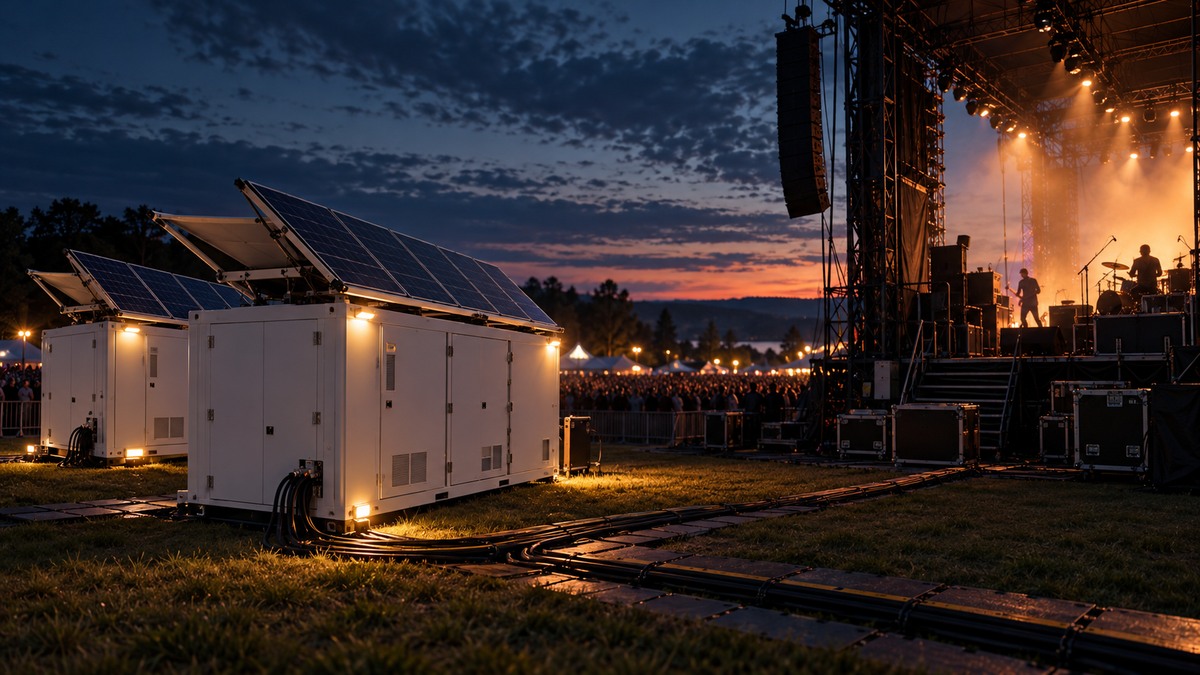
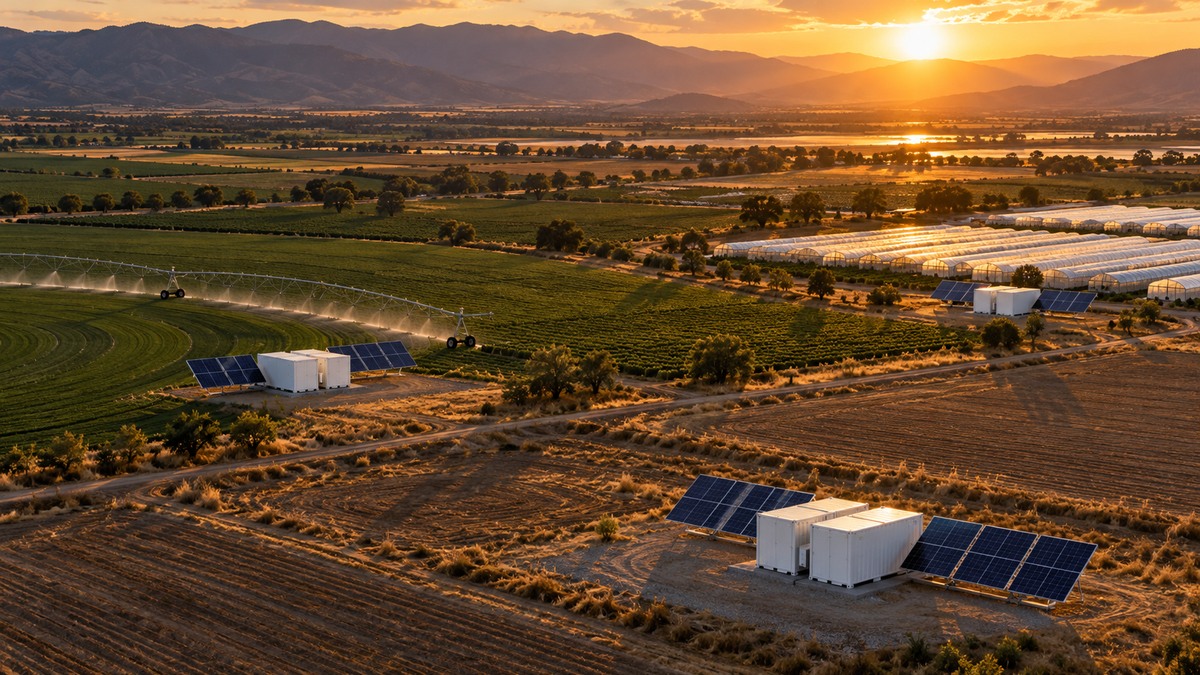
Here is where equipment design changes the strategy. A fixed solar array is a thirty-year commitment to one patch of ground. A Mystic Energy node is not: it is a transportable unit — a fold-out solar array of up to roughly 140 kW peak paired with containerized LFP storage — that deploys on level ground in under 24 hours and can be picked up and moved when the rotation moves.
That mobility creates what our farm platform documentation calls the fallow-field play. A field taken out of production for a season does not sit idle: a node positioned on the resting acreage generates power for the operation — and, where the local utility offers net metering or an export tariff, sells the midday surplus to the grid — then moves to the next field in the rotation while the first recovers. The land earns while it rests. Layer shade-tolerant plantings under and around the array and the same resting acre is producing energy, export revenue, and a specialty crop at once.
Because the storage core is modular — configurable from 100 kWh to 2 MWh per unit and stackable — the same hardware that anchors an agrivoltaic plot also runs the pivots, the cold storage, and the rest of the farm’s electrical load around the clock. Our platform documentation models delivered energy near 1.8 cents per kilowatt-hour over a 20-year horizon — a modeled illustration built on a 20-year modeling assumption, not a quote — against rural grid rates several times higher.
Getting the layout right
Agrivoltaics is a design exercise, not just a planting decision. Row spacing and panel height determine how much light reaches the understory; crop selection has to match the shade pattern; and irrigation lines, harvest access, and equipment clearance all have to coexist with the array. This is another argument for starting on fallow or marginal ground rather than re-engineering productive acres: the first plot is where the farm learns what its light, soil, and labor can support. A site-specific assessment — loads, sun resource, soils, and the export tariff available locally — is where the general case becomes your case. The energy glossary covers agrivoltaics, net metering, and the rest of the vocabulary.
Frequently asked questions
Does agrivoltaics work with corn or soybeans?
Generally no — commodity row crops need full sun. The model fits shade-tolerant, higher-value crops such as leafy greens, root crops, herbs, and berries, typically on fallow, rotation, or marginal acres rather than prime row-crop ground.
How much water does the shade save?
Published agrivoltaics research reports roughly 25–40 percent reductions in soil evaporation under panels, with longer soil-moisture retention and lower crop heat stress. Actual savings depend on climate, crop, and irrigation practice.
Do I have to dedicate land permanently?
Not with a deployable system. A containerized node deploys in under 24 hours on level ground, foundation-optional, and can be relocated as your rotation changes — which is what makes the fallow-field approach possible.
Is the revenue-per-acre comparison a projection for my farm?
No. Figures comparing specialty-crop and commodity revenue are illustrative gross numbers from the agrivoltaics literature and USDA price data. What your acres would earn depends on your market, labor, and water — which is what a site-specific assessment models.
Put a resting acre to work
If your operation carries fallow or marginal ground, that ground can be earning — energy for the farm, export revenue where the tariff supports it, and a specialty crop under the panels. Explore the Mystic Energy platform or contact our team for a site-specific assessment. Mystic Energy — Boca Raton, FL · +1 (762) 316-5592.