The Caribbean Hurricane Resilience Guide

A homeowner’s playbook for buying or building a Cat-5-rated home in the Caribbean · Mystic Enterprises · April 2026

A homeowner's playbook for buying or building a Cat-5-rated home in the Caribbean • Mystic Enterprises • April 2026

In the last decade, the Caribbean has experienced multiple Category 5 hurricanes — Irma, Maria, Dorian. Insurance markets in Florida and the Caribbean have responded by raising premiums, dropping high-risk properties, or exiting the market entirely.

For a Caribbean homebuyer, the calculus has changed. A home that isn’t rated for Cat-5 winds and isn’t energy-resilient is increasingly expensive to insure, increasingly hard to sell, and — when the next storm hits — increasingly hard to live in.

Resilience has shifted from a feature to the product. This guide is how to think about it.

What "hurricane-rated" actually means

Wind speed ratings (the easy number)

Hurricane categories are wind-speed bands defined by the Saffir–Simpson scale:

  • Category 1: 74–95 mph
  • Category 2: 96–110 mph
  • Category 3: 111–129 mph (major)
  • Category 4: 130–156 mph (major)
  • Category 5: 157+ mph (major)

A “Cat-5-rated” home is engineered to remain structurally intact at wind speeds at or above 157 mph. The actual rating depends on the structural ties, roof construction, glazing, and anchor system.

Glazing — the failure mode that takes the rest of the house down

Most hurricane damage to interior structure starts with a window or door breach. Once the building envelope is breached, internal pressure differentials lift the roof. The roof failing causes the rest.

Impact-rated glazing (ASTM E1996, Large Missile Level D or higher) is the difference between a sealed building envelope and an interior pressure-differential failure. AstroShield-grade glazing on Mystic Eco-Haven homes is rated to ASTM E1996 Large Missile Level D — the same grade specified for Caribbean Cat-5 deployments.

Roof and structural ties

Hurricane-rated roof systems use continuous load-path connections from the foundation to the ridge. Hurricane straps, gusset plates, and engineered fasteners replace traditional toe-nailing. Roofing material (clay tile, metal, asphalt) matters less than the underlying structural system. A modern metal roof installed over an engineered structural deck is dramatically more hurricane-resilient than a clay tile roof on traditional construction.

Anchor and foundation system

Hurricane-rated homes use anchored foundations — pinned, tied-in, or piled — depending on soil conditions. For Caribbean coastal sites, the foundation system also has to address surge and saturation. A correctly engineered foundation system in a Cat-5 storm is rarely the failure point; the structure-to-foundation connection is.

Days after the storm: where most homes actually fail

Surviving the wind is one variable. The days after the storm are the others. Most homes that “make it through” still become uninhabitable in the days after — because of grid failure, water failure, or post-storm structural compromise.

  • Grid power: Caribbean grids commonly take days to weeks to restore after a major storm.
  • Water: municipal water often shuts down or becomes unsafe.
  • Septic: high water tables and post-storm flooding compromise systems.
  • Roof and envelope: small leaks become structural problems if not addressed within 48 hours.

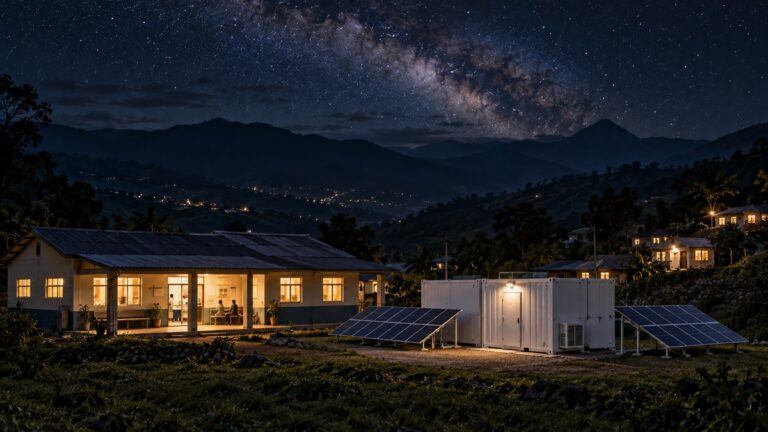
A home that is structurally Cat-5-rated but not energy-resilient is still a home you have to evacuate. The Mystic answer to this is integrated solar-plus-storage with islanded operation — meaning the home runs on its own when the grid is down, automatically.

What a Mystic Eco-Haven actually delivers

  • Cat-5 wind-rated structural system. Engineered, certified, deployed.
  • AstroShield-grade glazing — ASTM E1996 Large Missile Level D.
  • Continuous load-path structural connections from foundation to ridge.
  • Sealed building envelope — modular construction allows for tighter envelope tolerances than site-built.
  • Optional integrated solar-plus-storage with automatic islanding (Mystic Energy package).
  • SGS-certified across 20+ countries — including active Caribbean deployments.

Insurance reality (and why it's improving for Mystic homes)

Caribbean and Florida hurricane insurance markets are increasingly underwriting on engineering, not just geography. A Cat-5-rated home with documented engineering, on a properly anchored foundation, with energy resilience, is materially easier to insure than a comparable non-rated home on the same lot.

We can introduce buyers to insurance brokers familiar with Mystic builds in their target country.

What to ask any builder before you sign

  1. What is the wind-speed rating of this home, and who certified it?
  2. What is the glazing impact rating, and what test standard?
  3. Is there a continuous load path from foundation to roof? Show me the engineering documentation.
  4. What happens to this home in 18 hours of grid outage?
  5. What happens in 18 days?
  6. Is the home insurable in this country, by a broker you have worked with in the last 24 months?
  7. What is the manufacturer’s certification — and is it country-recognized?

Hurricane resilience insights